Wellness, Actually · October 22, 2026
Is organic food actually better for you or the planet?
Short answer
For your health, no, not meaningfully. Nutrient differences between organic and conventional produce are trivial, and pesticide residues on conventional food sit far below safety limits: you'd have to eat 22 apples a day for life, or 5,700 strawberries, to hit the EPA exposure threshold, which is itself set 100 to 1,000 times below the lowest dose with any effect in animals. For the planet it's close to a wash, because organic yields less per acre and needs more land. If your food budget is fixed, more produce beats organic produce.
Organic food costs more. That is the one thing everybody agrees on. The question is what you get for the premium, and the honest answer is less than the label implies.
Part of the appeal is historical and perfectly rational. In 1936, a German chemist named Gerhard Schrader was trying to synthesize better insecticides and accidentally created tabun, the first nerve agent. Tabun belongs to the organophosphate acetylcholinesterase inhibitors, the same class as sarin and VX. Modern insecticides work on a related principle. Knowing that, it is not strange that people look at a sprayed field and feel uneasy.
Organic is a checklist, not a philosophy
In the US, organic has a legal definition. No GMOs, no ionizing radiation, no sewage sludge, and no synthetic substances from the national list. That list includes glyphosate, the active ingredient in Roundup. Fertilizer is restricted too: organic farms use cover crops that fix nitrogen, animal manure, blood meal, bone meal. They cannot use synthetic nitrogen fertilizer.
The marketing is something else. The International Federation of Organic Agriculture Movements describes organic as a production system that sustains the health of soils, ecosystems, and people, relying on ecological processes and biodiversity and combining tradition, innovation, and science to promote fair relationships and a good quality of life for all involved. That is sunshine and rainbows. It is also not what the certification tests for.
A conventional farm can rotate its crops, feed its soil, and be run by people who love the land. An organic farm can be a billion-dollar industrial operation that simply checked the boxes. Did you use Roundup? No. Sewage sludge? No. Check, check, sticker. And the sticker is worth real money, which is why people cheat. Between 2010 and 2017 a farmer named Randy Constant sold ordinary Nebraska grain as organic and took in more than $140 million before he was caught. That case led to a 2023 enforcement rule tightening how organic operations are monitored.
Organic farms also use pesticides. They use natural ones. The most common is pyrethrin, extracted from chrysanthemums. Also boric acid, copper sulfate. Natural does not mean harmless. Rotenone, extracted from a legume root, was permitted for organic use until data suggested a possible link to Parkinson's disease, and it was largely banned in the US. The evidence there was never clean, but the principle holds: the most toxic substance on earth is botulinum toxin, which a bacterium makes for free. Assuming a chrysanthemum extract is safer than a lab synthetic because of where it came from is the naturalistic fallacy.
What the pesticide numbers actually look like
Start with what people believe. In a 2010 study in Judgment and Decision Making, researchers showed students Oreo labels. Half the labels added "made with organic flour and sugar." The students who saw the organic version rated the cookies as lower in calories, despite identical calorie labels, and said they were fine to eat more often. The effect was strongest among students who were more pro-environment. The paper opens with a line overheard in a natural foods checkout lane: "Mom, look, organic gummy bears." Growing corn organically does not remove its calories.
Taste follows the same pattern. Blinded, people rate organic and conventional produce about the same, with one possible exception: organic items tended to be judged slightly sweeter and juicier. Tell someone which is which and the organic one tastes better, feels better, and apparently makes them feel better afterward.
Nutritionally, it is close to a tie. One large meta-analysis found higher antioxidants and lower cadmium in organic crops. Another, in the Annals of Internal Medicine, found no meaningful difference. Macronutrients and micronutrients do not care how the pests were managed. The one finding in that second analysis that rings true: conventional chicken and pork were about 33% more likely to carry antibiotic-resistant bacteria, which makes sense given that organic livestock can't be given antibiotics. Contamination rates overall were similar and largely below maximum allowed limits. Cook your chicken. That advice was already free.
Conventional produce does leave measurable pesticide residues in you. In a randomized crossover trial in Australian adults, a week of mostly organic food dropped urinary organophosphate metabolites substantially. Whether that matters is a different question, and the dose arithmetic says it doesn't, at least for eaters.
Here is how the EPA sets its limits. Give animals escalating doses, find the lowest dose that produces any physiologic effect at all, then divide by 100 to 1,000. That is the human exposure ceiling. Now run the numbers on the "dirty dozen", the crops carrying the most residue: strawberries, spinach, kale, grapes, peaches, pears, nectarines, apples, bell and hot peppers, cherries, blueberries, green beans. To hit that threshold from apples, you would need to eat 22 apples every day for the rest of your life. Strawberries: 5,700 per day. Cherries: 6,500 per day. Fifty-seven hundred strawberries is roughly 23,000 calories, which is a problem long before the pesticides are.
If residues still bother you, rinsing and rubbing under plain water for 30 seconds removes most of them. A 15-minute baking soda soak works better. Nobody is soaking an apple for 15 minutes.
The exposure that deserves more attention is occupational. People who work in and live beside treated fields absorb vastly more than anyone eating a salad. The evidence there is not strong in either direction, but it's the place where concern is at least proportionate to dose. We spend enormous energy worrying about a child's minute exposure to residue on a strawberry and almost none on the conditions of the people who picked it.
Roundup, lawsuits, and why nobody trusts anyone
Glyphosate blocks an enzyme plants use to make aromatic amino acids. Animals don't have that pathway. So unlike the organophosphates, Roundup is a plant killer, and it kills essentially every plant it touches. Monsanto then engineered Roundup Ready crops with a modified version of that enzyme, so the crop survives and everything around it dies. Farmers license the seed, can't replant their own, and are contractually locked in. Glyphosate became the most-used herbicide on earth. Only recently have weeds begun evolving resistance, which anyone could have predicted.
The health case against it is weaker than the lawsuits suggest. The claimed effects range from cancer to a long list of other harms, and most of it has not held up. The signal with any staying power is non-Hodgkin lymphoma, and only in high-exposure groups, mostly farm workers. That's observational data, with no randomization and real differences between the groups being compared. I'm not convinced it's causal. If there is a causal effect, that's probably it.
Monsanto's conduct is a separate matter, and it was bad. In 2000 the company published a glyphosate safety review concluding the product was safe. Litigation documents released in 2017 showed staff discussing writing the paper themselves and having respected outside scientists sign their names. The paper was retracted in 2025, 25 years after publication. Not because the chemical was proven dangerous. Because the science was dishonestly produced.
Bayer, which owns Monsanto, set aside $10 billion in 2020 toward roughly 100,000 claims, and a proposed $7.25 billion class settlement is still pending. In June 2026 the Supreme Court ruled 7-2 for Monsanto in Monsanto v. Durnell: because the EPA does not require a cancer warning, states cannot impose one either, which guts the failure-to-warn theory behind most remaining suits. Glyphosate was removed from consumer Roundup sold in hardware stores in 2023. It is still sprayed on crops.
RFK Jr. was on the plaintiffs' side of the first big $289 million non-Hodgkin lymphoma verdict. As health secretary, he backed a February 2026 order invoking the Defense Production Act to boost glyphosate production. MAHA was not pleased.
The information environment around this is poisoned, and it isn't irrational to distrust it. An MIT computer scientist famously predicted glyphosate would make one in two children autistic by 2025. It is now 2026. That was an unhinged claim when she made it. But when the manufacturer ghostwrites its own safety review, people stop believing anyone, including the people who are right.
One other conventional pesticide worth naming: chlorpyrifos, which some studies have linked to lower IQ in children of exposed farm workers. The EPA banned it in 2021, the ban was overturned in 2023, and it is back in use for certain crops. Again, that's an exposure story about farms, not about groceries.
Two more things on health. You can find studies showing organic eaters get less cancer and less heart disease. Organic food is expensive and people who buy it have money and doctors. And if heavy metals are your worry, organic won't help. Those come largely from soil, and the certification has nothing to say about them.
The environmental case is genuinely a coin flip
There's one clear win for organic. Per acre, it has lower nitrogen losses and lower nitrous oxide emissions, partly because no one is burning natural gas to synthesize its fertilizer.
That fertilizer deserves a word, because conventional farming's dependence on it isn't a weakness. Before 1909, the nitrate in fertilizer was mined from niter deposits or from bird and bat guano, and seabird islands were strip-mined for it. The air is 79% nitrogen, but N2 is extremely stable and converting it to nitrate takes enormous energy. Fritz Haber worked out how, won a Nobel for it, and also developed chlorine gas for Germany in World War I. German chemists of that era had a pattern. The resulting fertilizer drove the green revolution, saved an estimated 18 to 27 million hectares of land from being cleared, and it is very hard to argue it did not spare hundreds of millions of people from hunger. None of that nitrate can be used on an organic farm.
Which brings you to yield. Organic produces less food per acre, because the pesticides are weaker and the fertilizer is weaker. Per unit of food rather than per acre, the Oxford analysis of 71 European studies found emissions came out roughly even, with organic using more land. Smith's 2019 simulation asked what would happen if England and Wales converted entirely to organic. Direct farm emissions fall about 6%. But the lost production has to be grown somewhere, and making it up overseas takes roughly five times the land. Net emissions go up.
Good crop rotation narrows the yield gap, and a well-run organic system might come out ahead. It is not a slam dunk in either direction, which is not what you hear from people who say organic is obviously better for the planet.
The scaling problem is real. In 2021 Sri Lanka banned synthetic fertilizer, rice yields collapsed, and the policy was reversed. I can buy organic. Everyone cannot buy organic, because the food does not exist at that yield. That uncomfortable fact sits under the whole conversation.
A note on biodynamic, which is organic plus astrology
Biodynamic farming was coined in 1924 by Rudolf Steiner and actually predates the term organic. The core idea is that a farm should be fully self-sufficient: everything used on it, including fertilizer, must be produced on it. A biodynamic vineyard needs animals that graze and manure the land. Nothing is imported. That part is appealing.
Then there's the rest. Planting and harvesting timed to astrological signs and the position of the moon and planets. Preparations buried in cow horns, dug up, ground, and scattered: 505 is manure, 504 is quartz crystals. Wine people love it and pay for it. Told which wine is biodynamic, they taste the difference. Blinded, they can't. That's true of most wine. I used to run a blind tasting at my house with ten bottles ranging from the cheapest I could find to the most expensive I could afford, and ask people to rank them by price. Dollar bottles got marked down. Past about fifteen dollars, nobody could do it.
Bottom line
If your food budget is fixed, and most people's are, the binding problem in your diet is not pesticide residue. It's that you aren't eating enough vegetables. Spending extra per item to make your produce organic, and therefore buying less of it, trades a real benefit for a theoretical one. Buy more conventional produce instead.
If money isn't the constraint, I'd still pass on organic as a category and spend the premium on small local farms instead. Not because of what they spray, but because the money goes to people growing food they care about rather than to industrial operations that happen to have cleared a checklist. Both can carry the same sticker.
Here's our discussion from the episode:
I covered this in depth on Wellness, Actually, listen below.
Frequently asked questions
Is organic food more nutritious than conventional food?
Barely, if at all. One large meta-analysis found higher antioxidant levels and lower cadmium in organic crops, while a separate meta-analysis in the Annals of Internal Medicine found no meaningful nutritional difference. Macronutrients and micronutrients do not change based on how pests were managed.
How many pesticides are actually on conventional fruits and vegetables?
Measurable amounts, but far below safety thresholds. The EPA sets its limit by finding the lowest dose causing any physiologic effect in animals and dividing by 100 to 1,000. To reach that threshold you would need to eat 22 apples every day for life, or 5,700 strawberries daily, or 6,500 cherries daily.
Does washing produce remove pesticide residue?
Mostly, yes. Rinsing and rubbing produce under plain water for 30 seconds removes most residues. Soaking in baking soda for about 15 minutes removes more, though almost nobody is going to soak an apple that long.
Does Roundup cause cancer?
The evidence is weak. The one signal with any staying power is non-Hodgkin lymphoma, and only in high-exposure groups like farm workers, based on observational data with no randomization. In June 2026 the Supreme Court ruled 7-2 for Monsanto on the failure-to-warn question, but the Court did not rule on whether glyphosate causes cancer.
Do organic farms use pesticides?
Yes. They are restricted to natural pesticides such as pyrethrin, which comes from chrysanthemums, plus substances like boric acid and copper sulfate. Natural does not mean safe: rotenone, a plant-derived insecticide once allowed in organic farming, was largely banned in the US after data suggested a possible link to Parkinson's disease.
Is organic farming better for the environment?
It is close to a wash. Per acre, organic farms have lower nitrogen losses and lower nitrous oxide emissions, but they yield less food per acre, so emissions per unit of food come out roughly even and land use goes up. A 2019 simulation found that if England and Wales went fully organic, farm emissions would fall about 6% but making up the lost food overseas would take roughly five times the land, pushing net emissions higher.
Wellness, Actually Podcast
"What's the deal with organic food?" — Listen to the full episode, including the week's health news and listener Q&A.
About the author
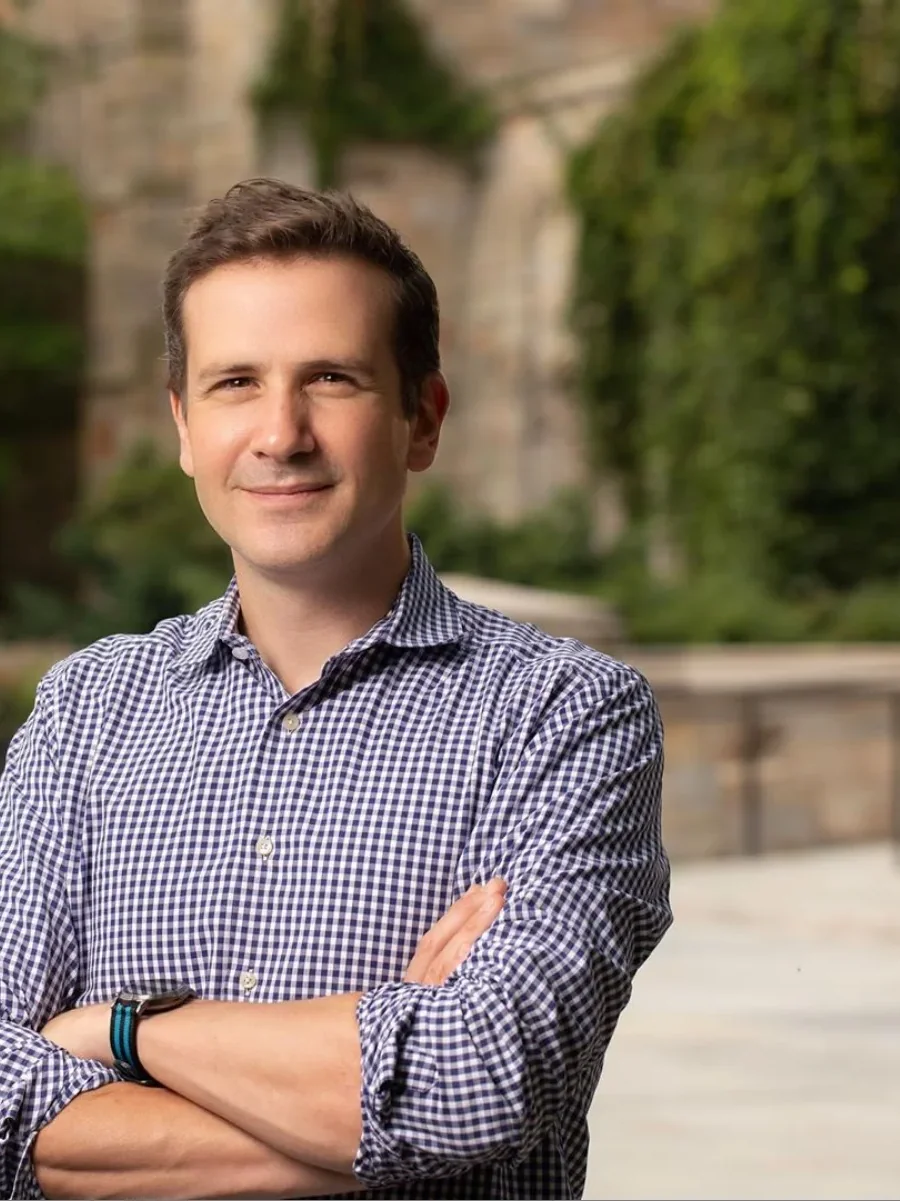
F. Perry Wilson, MD MSCE is a nephrologist, clinical researcher, and Associate Professor of Medicine and Public Health at Yale University, where he directs the Clinical and Translational Research Accelerator. He hosts the Wellness, Actually podcast with Emily Oster, writes the weekly Impact Factor column on Medscape, and is the author of How Medicine Works and When It Doesn't (Grand Central, 2023).