Wellness, Actually · October 29, 2026
Can you actually cheat death? What the science says about immortality, dying, and near-death experiences
Short answer
No. Nothing has ever been shown to stop death, and the modern attempts are failing the same way the old ones did. Resveratrol extended the life of brewer's yeast, GSK paid $720 million for the company, and shut it down in 2013. Rapamycin extends lifespan in mice, but a 2024 systematic review found no clear lifespan benefit in humans. The case fatality rate of life is 100%, and the one intervention with a proven survival benefit at the end of life is early palliative care, which added about 2.7 months of median survival in metastatic lung cancer while improving quality of life.
Humans want two things: to be rich and to not die. The second one has a perfect losing record, and the methods people have used to chase it tell you a lot about what each era believed science could do.
Every generation picks the most impressive technology it has and tries to drink it
The oldest written evidence I could find is the Epic of Gilgamesh, around 2100 BC, where the hero goes hunting for a potion that confers immortality. In 210 BCE, the Chinese emperor Qin Shi Huang sent out multiple expeditions to find an elixir of immortality. They never returned. In the meantime he drank preparations containing mercury, on the theory that a metal that flowed and gleamed must be magical. He is believed to have died of mercury toxicity. He was also buried with the terracotta army, just in case he wasn't really dead.
The Holy Grail is less satisfying than Indiana Jones made it. The first reference comes from a poem called Percival, the Story of the Grail, written around 1180 by Chrétien de Troyes. The narrator sees a mysterious figure carrying a jeweled grail, which at the time would have meant a large serving dish. The poem was left unfinished, centuries of what amounts to fan fiction filled in the rest, and by about 1200 the serving dish had become the cup that caught the blood of Christ and the mysterious figure had become a man who lived an obscenely long time. The Fountain of Youth is similar. Juan Ponce de León was an ordinary explorer looking for money and slaves. The youth-seeking legend attached to him after his death, possibly to make him look foolish.
Then blood, which is where this gets properly Halloween-adjacent. In the 1490s, Pope Innocent VIII was accused of drinking boys' blood to stay alive. Biologically this was never going to work. Blood goes to your stomach and you digest it. He died anyway. Elizabeth Báthory was said to have bathed in virgin blood to stay young, a claim that didn't surface until well after her own death. In 1667, Jean-Baptiste Denys transfused lamb blood into humans, a patient died, and the practice was banned.
The modern version has better data behind it and roughly the same track record. A 2005 Nature paper surgically joined the circulations of an old mouse and a young mouse and found that tissues in the older animal were rejuvenated. Genuinely cool. Also a good illustration of a recurring problem: we are much better at extending lifespan in mice than in people. That hasn't stopped anyone. Brian Johnson, the don't-die influencer, took plasma transfusions from his teenage son for a couple of years and then stopped, saying it did nothing. There is no evidence that transfusing yourself with the blood of the young does anything useful, and it carries real risk.
Electricity got its turn too. In 1791, Galvani made a dead frog's legs twitch with a current and people assumed he was reanimating it. In 1803, Giovanni Aldini did the same to the corpse of a hanged murderer, whose jaw quivered and one eye opened. Mary Shelley was reading about these experiments when she wrote Frankenstein in 1818.
And ice. The Prospect of Immortality, published in 1962, launched the cryonics movement on the premise that if you freeze a body cold enough, you can thaw it out later when medicine is better. James Bedford, a psychology professor, was the first person frozen, in the 1960s, and is still frozen. Others have not been so lucky, because cryonics labs run out of money for liquid nitrogen and their clients thaw. You can still buy this today. Tomorrow.bio will freeze you for 200,000 euros. The business proposition requires a company to stay in operation for centuries. Very few do.
The modern longevity movement keeps making the same mistake
The pattern is consistent. Find something intriguing in a cell culture, a yeast colony, or a mouse. Decide it will extend human life. Reorganize your morning around it.
Antioxidants are the cleanest example. The free radical theory from the 1950s wasn't pulled out of thin air. Stress a cell culture, it produces free radicals, those free radicals damage DNA. All true. Add vitamin E and you fix the problem you just created in your dish. Then you run a large randomized trial of vitamin E versus placebo and there is no health benefit, and the vitamin E arm had an increased rate of heart failure for reasons that remain unclear.
Resveratrol followed the same arc with more money attached. A 2003 Nature paper showed that resveratrol, a compound found in red wine, prolonged the life of Saccharomyces cerevisiae. Brewer's yeast. GlaxoSmithKline bought the spinout company for $720 million in 2008. The supplements didn't improve health. GSK shut the company down in 2013. I still drink red wine. I just don't tell myself it's medicine.
Rapamycin is the current favorite, and unlike resveratrol it is a serious drug, one we use to suppress the immune system in transplant patients. It extends lifespan in mice. In humans, a 2024 systematic review found no clear lifespan benefit, with some signal around aging-related measures in the immune system. Brian Johnson took it and then stopped.
There is a straight line from mercury in the Qin dynasty to this. Something novel, something exciting, sometimes even some compelling data, and then a rush to embrace it. Here is the depressing truism of medicine underneath all of it: most things don't work. Most trials fail, and most ideas never make it into a trial at all.
What actually happens when you die, minute by minute
Death is harder to define than most people assume, because your body is a collection of cells and they don't all quit at once.
Say circulation stops. You have roughly 10 to 20 seconds of consciousness. At 20 to 40 seconds, the EEG goes flat. Then something strange happens around 50 seconds later. A 2023 PNAS study looked at four comatose patients who were not brain dead but were going to be removed from the ventilator. With family consent, researchers placed EEGs, withdrew the breathing tube, and recorded everything. In two of the four, a high-frequency gamma power surge swept across the brain, localized to the somatosensory cortex and the dorsolateral prefrontal cortex, areas associated with conscious experience. Connectivity mapping made it look like a dreaming state. These were patients with almost no brain function, and as they died there was a brief burst of something resembling conscious dreaming. Then it stopped. We have no idea what, if anything, they experienced.
At four to six minutes, neuronal injury becomes irreversible. That's at 98.6 degrees. Cold slows the whole process down dramatically, which is why plenty of people who drown under ice have been revived much later, and why we have a saying in medicine: you're not dead until you're warm and dead. Within minutes of circulatory arrest, autolysis begins and cells start digesting themselves, the pancreas especially. Bacteria take over around two days later. The heart is recoverable for about 30 minutes, kidneys for about 60, which matters for transplant rather than resuscitation. Rigor mortis sets in two to six hours out and resolves as the muscles break down. Corneas remain transplantable for about 24 hours.
Declaring death is its own thing. The nurse calls to say she thinks a patient has passed, and it isn't official until a physician examines the body. You inspect to confirm no breathing. You listen for a heartbeat for a full minute, which is a nerve-wracking minute, because you start half-hallucinating sounds. You feel for a pulse, test for response to painful stimuli, and check that the pupils are fixed and dilated, since pupillary reaction is a brainstem reflex and the brain can't work if you're dead. It is terrifying not because death is scary but because this is the one diagnosis you cannot get wrong. Doctors have gotten it wrong. People have woken up in the morgue.
That uncertainty is old. In the 1800s, telling the dead from the deeply asleep was genuinely hard, which produced the safety coffin: bells, tubes, and flags rigged so the occupant could signal if they'd been buried prematurely. The fear of being buried alive has its own name. I went looking for a documented case of a safety coffin bell actually being rung. I couldn't find one.
The folklore may run the other direction. Paul Barber argued that vampire legends came from decomposition itself. Dig up a body on suspicion of evil and you may find it bloated and ruddy with blood at the mouth, which is purge fluid working its way out as the body breaks down.
Then there's the Lazarus phenomenon, which is real: spontaneous return of circulation after CPR has been stopped. A 2023 review in the Journal of Clinical Medicine collected 76 cases of autoresuscitation. The median time from stopping CPR to the heart restarting on its own was five minutes. Thirty-two percent of those patients survived, and 15% had an intact neurologic outcome. Not zero. This is why donation after cardiac death involves sitting in an operating room after the ventilator comes out, watching, waiting for the heart to stop, and then waiting about ten more minutes before anyone touches anything. Macabre, and necessary.
For what it's worth, our ability to reverse clinical death is both real and narrow. The rescue societies founded in Amsterdam and London in 1767 to revive drowning victims pioneered early rescue breathing, and also blew tobacco smoke up the rectum with a bellows, which did not work. Defibrillation arrived in the late 1940s. Closed-chest CPR was described in JAMA in 1960, and looks much like what we do today. Portable defibrillators have saved an enormous number of people. All of it is vastly more limited than drinking the blood of the young to live forever. Also vastly more effective.
Near-death experiences, and the shelves nobody saw
Near-death experiences show up across cultures with surprising consistency: peace, a tunnel, a light, sometimes figures. People are drawn to them because they look like a window onto whatever comes after.
Worth being precise about the term. These are not people who came back from brain death or from a completed death exam. These are people whose hearts stopped, usually briefly, and were restarted. Two centuries ago a stopped heart meant you were dead. Now it sometimes doesn't. So it is near death, not death.
The gamma surge is a reasonable candidate explanation, but we can't ask those four patients what they experienced, because they all died. The more direct test is the AWARE study, published in Resuscitation in 2014 across 15 hospitals in the US, UK, and Austria. One of the universal features of the near-death experience is the out-of-body sensation, floating above the room and looking down at the team doing CPR. So the investigators installed shelves high on the walls of ERs and ICUs and placed images on top of them: animals, religious symbols, numbers. Invisible from the floor. Visible if you really were up near the ceiling. There were 2,060 cardiac arrests, though only 22% occurred in rooms with shelves. Among those who survived and could describe what happened, nobody correctly identified an image.
In fairness, nobody told these patients there would be a quiz. What people do report accurately is sound, including conversation and music playing during their resuscitation. That strikes me less as mystical and more as a sign of good CPR, enough perfusion reaching the brain to lay down some memory.
Bottom line
About 117 billion humans have ever been born, roughly 7% are alive now, and the other 93% died. The case fatality rate of life is 100%. Of all the things that might happen to you, this is the only one that definitely will, which makes it the single most rational thing to prepare for. Much of the wellness and tech-longevity industry looks to me like an elaborate way of not doing that.
And the limit is probably doing something useful. If you were immortal, nothing would ever be urgent, because there would always be more time. The psychology literature finds that people regret what they didn't do more than what they did, and the regrets that pile up at the end of life are about things left unaccomplished.
The most practical thing here is palliative care, which focuses on quality of life rather than lengthening survival. In a 2010 New England Journal trial in metastatic lung cancer, patients randomized to early palliative care had less depression, received less aggressive end-of-life care, and lived longer, with median survival of 11.6 months versus 8.9. The medical community expected comparable survival and fewer side effects. Longer survival was the eye-opener. It is worth deciding now what you want the end of your life to look like, and sometimes the answer involves less medical intervention rather than more. Seneca put it more bluntly: if you have learned to die, you have unlearned being a slave.
Here's our discussion from the episode:
I covered this in depth on Wellness, Actually, listen below.
Frequently asked questions
Does rapamycin extend human lifespan?
There is no good evidence that it does. Rapamycin extends lifespan in mice, but a 2024 systematic review in humans found no clear lifespan benefit, with some signal around aging-related measures in the immune system. It is also a real drug used to suppress the immune system in transplant patients, not a benign supplement.
Does resveratrol from red wine help you live longer?
No. A 2003 Nature paper showed resveratrol prolonged the life of brewer's yeast, and GlaxoSmithKline bought the spinout company for $720 million in 2008. The supplements did not improve health and GSK shut the company down in 2013. Red wine is fine to enjoy, but not as a longevity intervention.
Do young blood transfusions actually work for anti-aging?
There is no evidence they do in humans. A 2005 Nature study joined the circulations of an old and a young mouse and rejuvenated tissues in the older animal, but that has not translated to people. Brian Johnson took plasma transfusions from his teenage son for a couple of years, then stopped, saying it did nothing. Transfusions also carry real risks.
What happens to your body in the first minutes after you die?
After circulation stops you have roughly 10 to 20 seconds of consciousness, and the EEG goes flat at 20 to 40 seconds. Irreversible neuronal injury occurs at four to six minutes at normal body temperature, though cold slows this considerably. Cells begin digesting themselves within minutes, rigor mortis sets in at two to six hours, and corneas remain transplantable for about 24 hours.
Can your heart restart on its own after CPR is stopped?
Yes, rarely. It is called the Lazarus phenomenon, and a 2023 review in the Journal of Clinical Medicine found 76 documented cases of autoresuscitation, with a median of about five minutes between stopping CPR and the heart restarting. Thirty-two percent of those patients survived and 15 percent had an intact neurologic outcome. This is why organ donation after cardiac death requires a waiting period of about ten minutes.
Is there scientific proof of out-of-body experiences during cardiac arrest?
No. The AWARE study, published in Resuscitation in 2014 across 15 hospitals in the US, UK and Austria, placed images on high shelves visible only from near the ceiling in rooms where CPR occurs. Across 2,060 cardiac arrests, only 22 percent of which happened in rooms with shelves, no survivor correctly identified an image. Patients do, however, accurately report sounds and music from their resuscitation.
Does palliative care shorten your life?
The opposite, at least in one well-known trial. A 2010 New England Journal of Medicine study in metastatic lung cancer found that patients given early palliative care had less depression, received less aggressive end-of-life care, and had longer median survival, 11.6 months versus 8.9 months. Talking about dying did not make people die sooner.
Wellness, Actually Podcast
"What's the deal with death?" — Listen to the full episode, including the week's health news and listener Q&A.
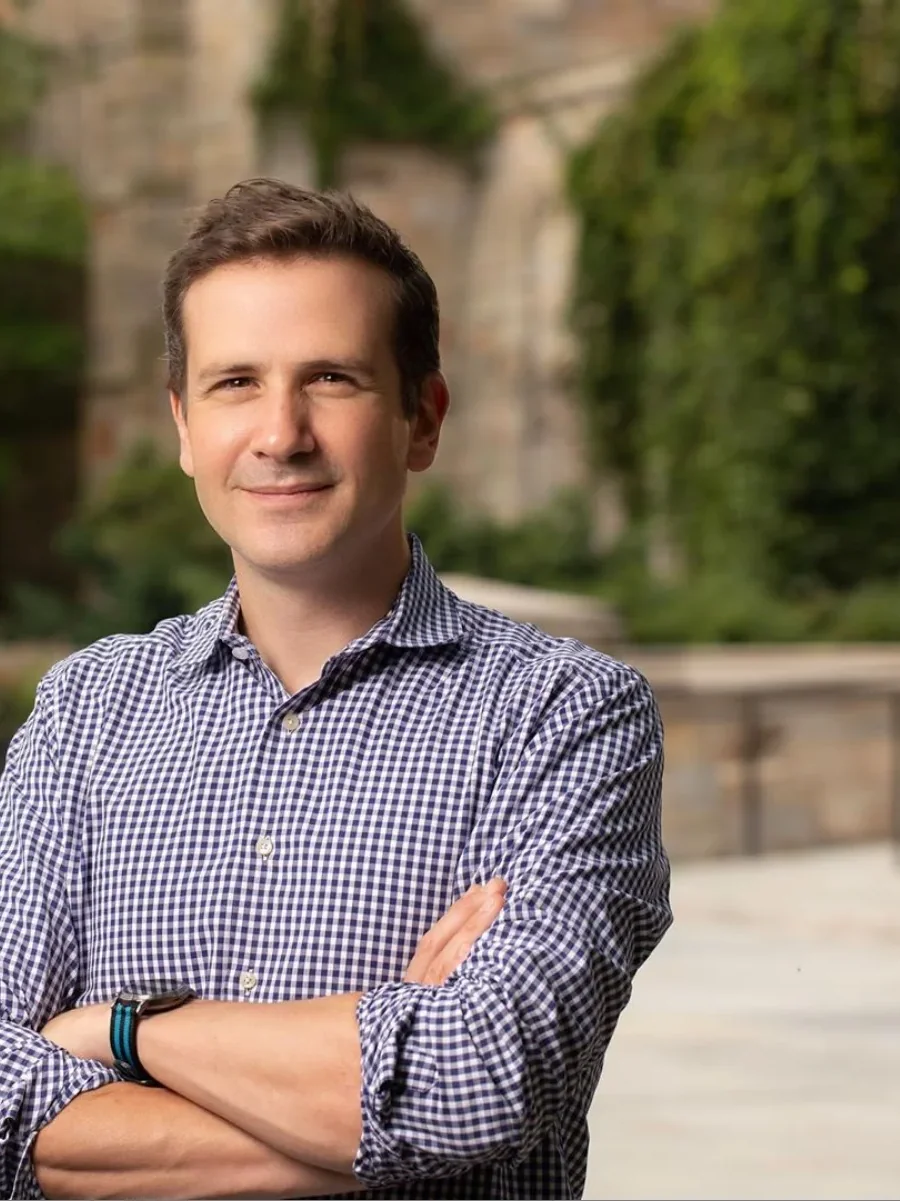
About the author
F. Perry Wilson, MD MSCE is a nephrologist, clinical researcher, and Associate Professor of Medicine and Public Health at Yale University, where he directs the Clinical and Translational Research Accelerator. He hosts the Wellness, Actually podcast with Emily Oster, writes the weekly Impact Factor column on Medscape, and is the author of How Medicine Works and When It Doesn't (Grand Central, 2023).