Wellness, Actually · July 2, 2026
How do mRNA vaccines actually work, and are they safe?
Short answer
mRNA is a photocopied recipe your cells read and then throw away, not something to detox from. A vaccine uses it to have your own cells display one piece of a virus so your immune system learns to recognize it. The main real risk of the COVID vaccines, myocarditis in young men, is small and worth weighing against the disease. The same platform already halved recurrence in a melanoma cancer-vaccine trial.
mRNA is the most misunderstood molecule in the cell. That misunderstanding has spawned a remarkable amount of nonsense, and it has also obscured what is genuinely one of the most important medical advances of the last several decades.
Here is the thing that makes mRNA so powerful. Proteins get their function from their three-dimensional shape, which is complicated and hard to predict. mRNA gets its function from its one-dimensional structure, which is just code. Four letters in a specific order. That's it. Simple, and programmable.
What mRNA actually does
Start with high school biology. DNA lives in the nucleus, the inner sanctum of the cell. Think of it as a cookbook with a recipe for every protein a cell could ever make. You don't want to mess with it. When you damage DNA, you get cancer and other problems, so the cell keeps it locked away.
To build a protein, the cell photocopies a single recipe out of that book. That copy is messenger RNA, or mRNA. It leaves the nucleus, travels into the cytoplasm, and docks with factories called ribosomes. Every three letters of code corresponds to one amino acid. The ribosome reads the code and strings amino acids into a chain, which folds into a protein. You are your proteins. Hair, lung mucus, antibodies, all of it comes from this process.
Then the recipe gets thrown away. Your cells are full of enzymes whose entire job is to chew up RNA. This is deliberate. Many viruses use RNA as their genetic material, so your body treats stray RNA as a hostile force. Anyone who has worked with RNA in a lab knows how fragile it is. You wipe down the bench, you wear a mask, because there are RNA-degrading enzymes in your breath and sweat. DNA you can pull out of amber. RNA falls apart if you look at it wrong.
That fragility is why mRNA took decades to become a usable drug. Any mRNA you injected into an animal got destroyed almost instantly. Two innovations fixed that. In 2005, Katalin Kariko and Drew Weissman swapped one RNA letter, uridine, for a nearly identical chemical called pseudouridine, which eliminates most of the immune system's attack on injected RNA. They won the Nobel Prize for it in 2023. The second innovation was the lipid nanoparticle, a fatty shell that carries the mRNA into the cell and then releases it inside.
Why the COVID vaccine timeline was insane
A traditional vaccine takes 10 to 15 years to develop. The mRNA COVID timeline still shocks people who hear it.
On January 10, 2020, the SARS-CoV-2 genome was published online. Three days later, on January 13, the mRNA sequence was locked in for production. They could effectively print the vaccine. The first human phase 1 injection was March 16, 2020, roughly the day the country locked down. The emergency use authorization came in December. Almost all of that intervening time was spent running trials, which you can't rush, because you have to recruit people and wait to see what happens.
The mRNA COVID vaccines code for the spike protein, one protein on the surface of the virus. Your cells make it, your immune system sees something unfamiliar, and it builds antibodies. If the real virus shows up later, you're ready. That's different from a traditional vaccine, which injects a killed virus or the protein itself.
The scalability is what sets mRNA apart. The flu vaccine requires infecting roughly 500 million fertilized chicken eggs a year, cracking them, and inactivating the virus inside. An mRNA vaccine needs a bioreactor. A 10-liter reactor, about five large soda bottles, can make a few million doses a day. There is no contest. And the early trials showed vaccine efficacy above 90% against infection, which was nuts. That protection faded as the virus mutated, but even the latest data still show moderate efficacy against hospitalization and severe illness.
The myocarditis risk is real
Not every concern about mRNA vaccines is a conspiracy theory. The one that holds up is myocarditis, inflammation of the heart muscle, particularly in young men.
The leading hypothesis is molecular mimicry. The spike protein bears some resemblance to a potassium channel protein on heart cells, so antibodies against spike can cross-react with the heart. Estrogen appears protective and testosterone appears to make it worse, which fits the higher risk seen in young men.
The question with any medical decision is whether the benefit is worth the risk. The ACC estimated that for every 1 million males aged 12 to 29 getting a second mRNA dose, you'd expect roughly 39 to 47 myocarditis cases, but you'd prevent 560 hospitalizations, 138 ICU admissions, and 6 deaths from COVID. Across age and sex groups, the benefit-risk ratio favored vaccination when you account for the full spectrum of complications.
The calculus has shifted since 2020. Nearly everyone has now been infected at least once, so severity has dropped even in the unvaccinated, and healthy adults and kids are getting far fewer boosters. The groups with the most to gain now are older adults, for whom myocarditis is not a meaningful risk. For teenage boys, who tend to do well if they catch the virus, this is a genuine conversation to have with a clinician, not a slogan in either direction.
The conspiracy theories, and the future they obscure
Does mRNA change your DNA? No. This is the mother conspiracy theory, and it survives partly because "mRNA" sounds like "DNA." The nucleus is a heavily guarded compartment that RNA is deliberately excluded from. Getting RNA reverse-transcribed into DNA requires a specialized enzyme that viruses like HIV had to evolve an entire system to pull off. Ordinary mRNA can't do it.
The wilder claims, that the vaccines contain Jeffrey Epstein's DNA or are a depopulation scheme now hidden in the food supply, collapse the moment you understand the basic biology. The best defense against any of it is knowing what mRNA is and what it does.
That matters because the technology is far bigger than COVID. Cancer vaccines are the most advanced application. You biopsy a tumor, identify the antigens that make it different from healthy cells, and print a bespoke mRNA vaccine in weeks. A 2024 Lancet trial (KEYNOTE-942) randomized 157 patients with high-risk stage 3B to IV melanoma to pembrolizumab alone or pembrolizumab plus a custom mRNA vaccine. Recurrence or death occurred in 40% of the pembrolizumab-alone group versus 22% in the combination group. The vaccine side effects were the usual feeling-off-for-a-day story.
Then there is siRNA, which does the opposite of a vaccine. Instead of telling a cell to make a protein, it tells the cell to destroy a specific mRNA before it's ever read. Andrew Fire and Craig Mello won the 2006 Nobel Prize for discovering the mechanism. Because these molecules don't need to be read by a ribosome, their backbone can be heavily modified, so they last a long time. One drug, inclisiran, targets PCSK9 and cut LDL cholesterol by 50% with a twice-yearly injection in people already on maximum statins, in the ORION trials of about 3,000 patients. Another, zilebesiran, targets angiotensinogen and dropped systolic blood pressure by 15 to 20 mmHg at the highest dose in the KARDIA trials. Twice a year instead of a pill every morning.
Bottom line
mRNA is not a threat you need to detox from. It's a photocopied recipe your cells make and then throw away, and learning to use it deliberately took two Nobel Prizes and decades of work. The COVID vaccines were the proof of concept, developed at a speed that no other platform could match, and their real risk, myocarditis in young men, is small and worth weighing against the disease rather than dismissing. The bigger story is what's coming: personalized cancer vaccines that already halved recurrence in a melanoma trial, and twice-yearly injections for cholesterol and blood pressure. Abandoning this research because some people didn't like a lockdown would mean throwing away one of the most important innovations in modern medicine.
Here's our discussion from the episode:
I covered this in depth on Wellness, Actually, listen below.
Frequently asked questions
Do mRNA vaccines change your DNA?
No. Your DNA lives in the nucleus, a heavily protected compartment that RNA is deliberately excluded from. Getting RNA converted into DNA requires a specialized enzyme called reverse transcriptase, which viruses like HIV had to evolve an entire system to accomplish. Ordinary mRNA from a vaccine cannot do this.
How were the COVID mRNA vaccines developed so fast?
The SARS-CoV-2 genome was published online on January 10, 2020, and the mRNA sequence was locked in for production just three days later, because mRNA can essentially be printed from code. The first human injection came March 16, 2020, and the emergency use authorization arrived in December. Almost all of that time was spent running trials, which cannot be rushed. Traditional vaccines take 10 to 15 years.
What is the myocarditis risk from mRNA vaccines in young men?
The spike protein resembles a potassium channel protein on heart cells, so antibodies can cross-react and cause inflammation. The ACC estimated that for every 1 million males aged 12 to 29 getting a second dose, roughly 39 to 47 myocarditis cases would be expected, while 560 hospitalizations, 138 ICU admissions, and 6 COVID deaths would be prevented. Estrogen appears protective and testosterone appears to worsen it, which is why the risk is higher in young men.
How is an mRNA vaccine different from a traditional flu vaccine?
A flu vaccine requires infecting about 500 million fertilized chicken eggs a year, then cracking them and inactivating the virus inside. An mRNA vaccine only needs a bioreactor; a 10-liter reactor can make a few million doses a day. The mRNA vaccine also codes for just one protein, the spike, rather than exposing you to the whole virus.
Can mRNA be used to treat cancer?
Yes, and it is the most advanced non-COVID application. You biopsy a tumor, identify the antigens that make it different from healthy cells, and print a custom mRNA vaccine in weeks. In a 2024 Lancet trial of 157 high-risk melanoma patients, adding a personalized mRNA vaccine to pembrolizumab cut recurrence or death from 40% to 22%.
What is siRNA and how is it different from an mRNA vaccine?
siRNA does the opposite of a vaccine. Instead of telling a cell to make a protein, it tells the cell to destroy a specific mRNA before it is ever read. This lets drugs work for months at a time, like inclisiran, which cut LDL cholesterol by 50% with a twice-yearly injection, and zilebesiran, which lowered systolic blood pressure by 15 to 20 mmHg. Andrew Fire and Craig Mello won the 2006 Nobel Prize for discovering the mechanism.
Wellness, Actually Podcast
"What's the deal with mRNA?" — Listen to the full episode, including the week's health news and listener Q&A.
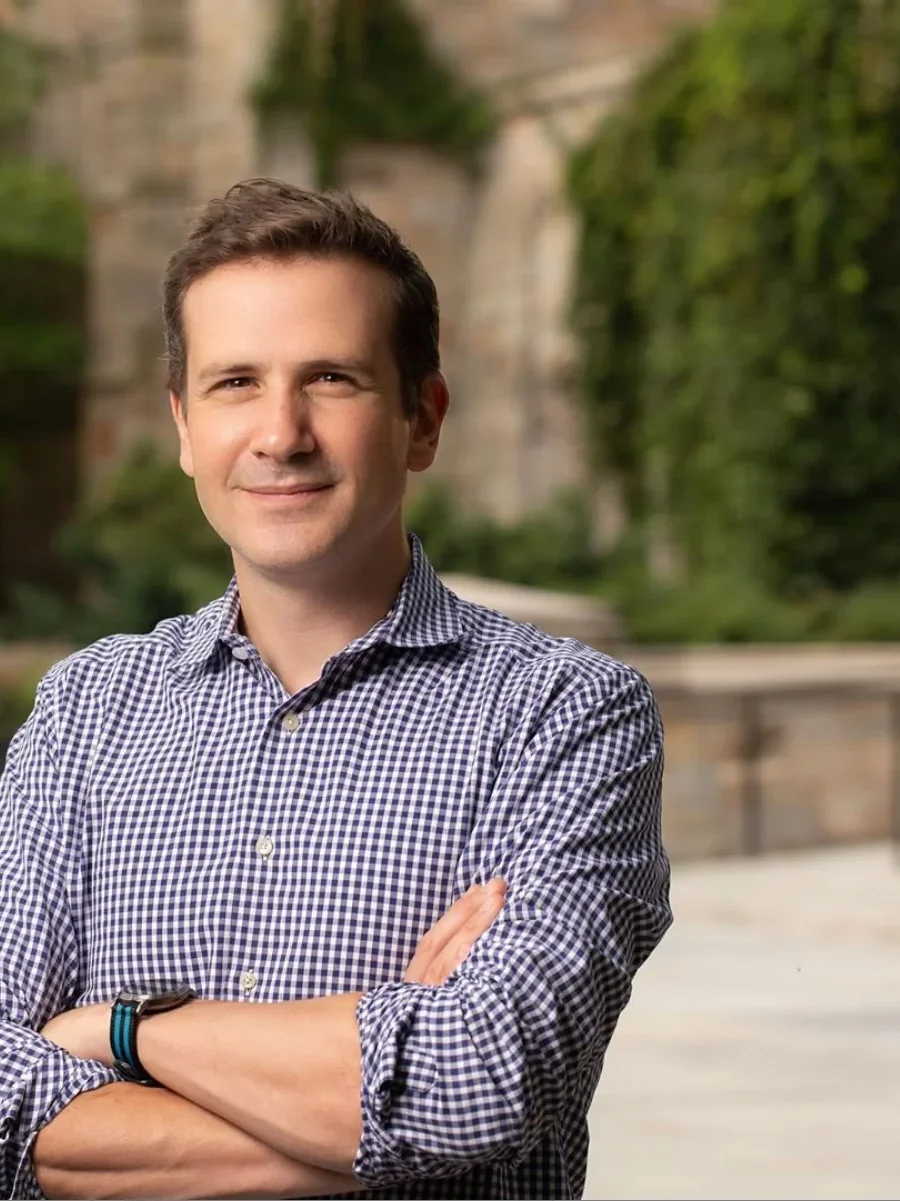
About the author
F. Perry Wilson, MD MSCE is a nephrologist, clinical researcher, and Associate Professor of Medicine and Public Health at Yale University, where he directs the Clinical and Translational Research Accelerator. He hosts the Wellness, Actually podcast with Emily Oster, writes the weekly Impact Factor column on Medscape, and is the author of How Medicine Works and When It Doesn't (Grand Central, 2023).