Wellness, Actually · June 25, 2026
Are full-body MRI scans worth it? What the evidence actually shows
Short answer
For healthy people, no. No major medical society recommends whole-body MRI screening, because it has never been shown in a randomized trial to save lives, and it surfaces incidental findings that trigger follow-up testing and anxiety. The screenings we do recommend, like mammography and colon cancer screening, earned their place with trials these companies haven't run.
You can now pay between $1,000 and $2,500 to slide into an MRI tube for an hour, watch some Netflix, and walk out with a report on everything from your brain to your toenails. The pitch is simple: more information about your body is better. The reality is more complicated, and the complications are the whole point.
Direct-to-consumer scans run on a long continuum. Some of what they do is genuinely useful, and some of it we already recommend. That is what makes this hard. A doctor will tell you that you don't need a full-body scan, then in the same breath tell you to get your mammogram and your colonoscopy. So why is one kind of scanning recommended and another isn't? The answer comes down to math, biology, and human psychology, in that order.
Why a positive result rarely means what you think
Start with a thought experiment. Imagine a disease that affects 1 in 10,000 people, and a test that catches 99% of cases with only a 2% false positive rate. That is an excellent test. Someone tests positive. What is the chance they actually have the disease?
Most people guess around 95%. The real answer is one half of one percent. Out of 10,000 people, the test finds the one real case. But that 2% false positive rate, applied to the 9,999 people who don't have the disease, flags about 200 of them. So you end up with roughly 200 false positives for every one true positive. A positive result means about a 1 in 200 chance of actually being sick.
This is the central problem with scanning for rare things. Full-body scans are an extreme version of an issue that already exists in standard screening. We already deal with false positives in mammography. Now imagine scanning the entire body and picking up every odd shadow in an elbow or a kidney. The false positives multiply.
Incidentalomas, overdiagnosis, and the care cascade
Three concepts matter here. The first is the incidentaloma, a finding you weren't looking for that turns out to be nothing, but that you can't confirm is nothing until you do more testing. You biopsy the spot on the adrenal gland, it comes back benign, and it would never have hurt you.
The second is overdiagnosis. This is when you find something that genuinely is bad, like a cancer, but you would have died of something else first. Autopsy studies make this vivid. In a series of 800,000 non-cancer autopsies in Japan, the overall incidental cancer rate was 4.2%, higher in recent years and rising with age. These weren't false positives. Had they been found in life, they would have triggered cancer treatment. But the cancer never killed these people. Aneurysms tell the same story. The rate of incidental brain aneurysms at autopsy runs 2% to 6%, far higher than the rupture rate of roughly 1 in 10,000 per year, which means most never rupture. Some do. When Kim Kardashian's scan found a small brain aneurysm, her surgeons recommended watchful waiting. That was probably the right call. It is also a hard thing to live with.
The third concept is the care cascade, and the best illustration comes from Michael Rothberg, writing in JAMA about his own father. An older man came in for a routine physical feeling fine. The doctor felt his aorta and thought it seemed enlarged, so ordered an abdominal ultrasound. The aorta was normal, but the ultrasound spotted something in the head of the pancreas. A CT scan followed. The pancreas was fine, but there was a lesion on the liver. A biopsy showed it wasn't cancer, it was a hemangioma, which bled massively and required ten units of blood and a $50,000 inpatient stay. Every step after the first was appropriate medicine. The only misstep was the initial aortic exam, which the USPSTF doesn't recommend, especially in non-smokers. The man was never sick. The screening made him sick.
What the data on full-body scans actually shows
Picture 1,000 people getting a full-body scan. About 70 will get totally normal results. The other 930 will have some abnormal finding. Around 300 will need specific follow-up. Twenty-two will have cancer. And five will have a cancer the scan missed anyway.
Those cancer numbers come from the POLARIS study, an ongoing Prenuvo-funded trial. The initial read covered 1,011 adults who paid out of pocket, with no control group. 93% had at least one previously undiagnosed finding, 29% required follow-up or treatment, and 22 had biopsy-confirmed cancers, a rate of 2.2%. A separate self-pay study of 3,603 adults, published in PLOS One in 2020, found 11.2% had an abnormality requiring consultation and 19 malignancies, with most people reporting no increase in worry afterward.
If you want a sense of how routinely these scans flag something, look at a 2014 study of 666 whole-body MRIs. The researchers found at least one incidental finding in 659 of 666 people. Brain infarcts showed up in 22% of the younger group and 45% of the older. Pulmonary nodules in 5% and 16%. Renal cysts in 17% and 41%. Spinal degeneration in 23% and 45%. You will be told something. Probably that you have a lung nodule, a kidney spot, disc degeneration, or evidence of an old micro-stroke you never noticed.
One trial design cut closer to the truth. Researchers in Europe scanned about 3,300 people but disclosed the findings to only half of them. Among those told their results, the rate of biopsies that turned out not to be cancer was 39% higher, and the rate of biopsies that did find cancer was 74% higher. The authors found clear evidence of overtesting and overdiagnosis.
A few practical caveats. MRI uses no ionizing radiation, so a whole-body MRI doesn't raise your cancer risk the way a whole-body CT can. And MRI doesn't see everything well. Breast, colon, and thyroid cancers are classically hard to spot, which is why those five missed cancers happen and why you should keep getting your age-appropriate screenings regardless.
Bottom line
No major medical society recommends whole-body MRI screening for healthy people, because it isn't cost-effective and hasn't been shown to save lives. The standard screenings we do recommend, like mammography and colon cancer screening, earned their place with randomized trials showing they reduce cancer-specific deaths. These scan companies haven't done that work yet. The ethical wrinkle is that they privatize the profits and socialize the costs, because the follow-up testing for every incidental finding gets billed to insurance, and through it, to everyone.
For an individual, the calculation is genuinely uncomfortable. What if you are one of those 22? That fear is powerful, and I won't pretend it's irrational. But the honest answer is that we don't know how many of those 22 cancers would ever have mattered, because we've never run the trial where you scan people and simply wait. If you do these scans well, doing them is sufficient for me, the incidental findings outweigh the rest. I'd pass, and I do.
Here's our discussion from the episode:
I covered this in depth on Wellness, Actually, listen below.
Frequently asked questions
How much does a full-body MRI scan like Prenuvo cost?
Direct-to-consumer full-body MRI scans generally cost between $1,000 and $2,500 and are paid out of pocket. They are not covered by insurance because no major medical society recommends them as screening for healthy people. The downstream follow-up testing, however, is often billed to insurance.
Are full-body MRI scans dangerous or do they cause cancer?
MRI uses no ionizing radiation, so a whole-body MRI does not raise your cancer risk the way a whole-body CT scan can. The main medical risk comes from downstream testing, such as biopsies triggered by incidental findings. There is also a real psychological cost from being told about findings you then have to monitor.
What is an incidentaloma and how common are they on full-body scans?
An incidentaloma is a finding you weren't looking for that turns out to be nothing, but that you can't confirm is harmless until you do more testing. They are extremely common on full-body scans. In a 2014 study of 666 whole-body MRIs, researchers found at least one incidental finding in 659 of the 666 people scanned.
Do full-body scans actually find cancer?
Yes, but rarely. In the Prenuvo-funded POLARIS study of 1,011 adults, 22 people, or 2.2%, had biopsy-confirmed cancers. At the same time, 93% had some undiagnosed finding and about 5 in every 1,000 had a cancer the scan missed entirely. We do not know how many of the cancers found would ever have caused harm.
Should I get a full-body scan instead of regular cancer screening?
No. Whole-body MRI misses cancers it is poor at detecting, particularly breast, colon, and thyroid. Standard screenings like mammography and colonoscopy have randomized trial evidence showing they reduce cancer deaths, which full-body scan companies have not yet produced. You should keep getting your age-appropriate screenings regardless of whether you do a full-body scan.
What is overdiagnosis and why does it matter for full-body scans?
Overdiagnosis is when a scan finds something genuinely bad, like a cancer, that would never have killed you because you would die of something else first. In 800,000 non-cancer autopsies in Japan, the incidental cancer rate was 4.2%, rising with age. These cancers were real but never fatal, meaning treating them would have been unnecessary.
Wellness, Actually Podcast
"What's the deal with full body scans?" — Listen to the full episode, including the week's health news and listener Q&A.
About the author
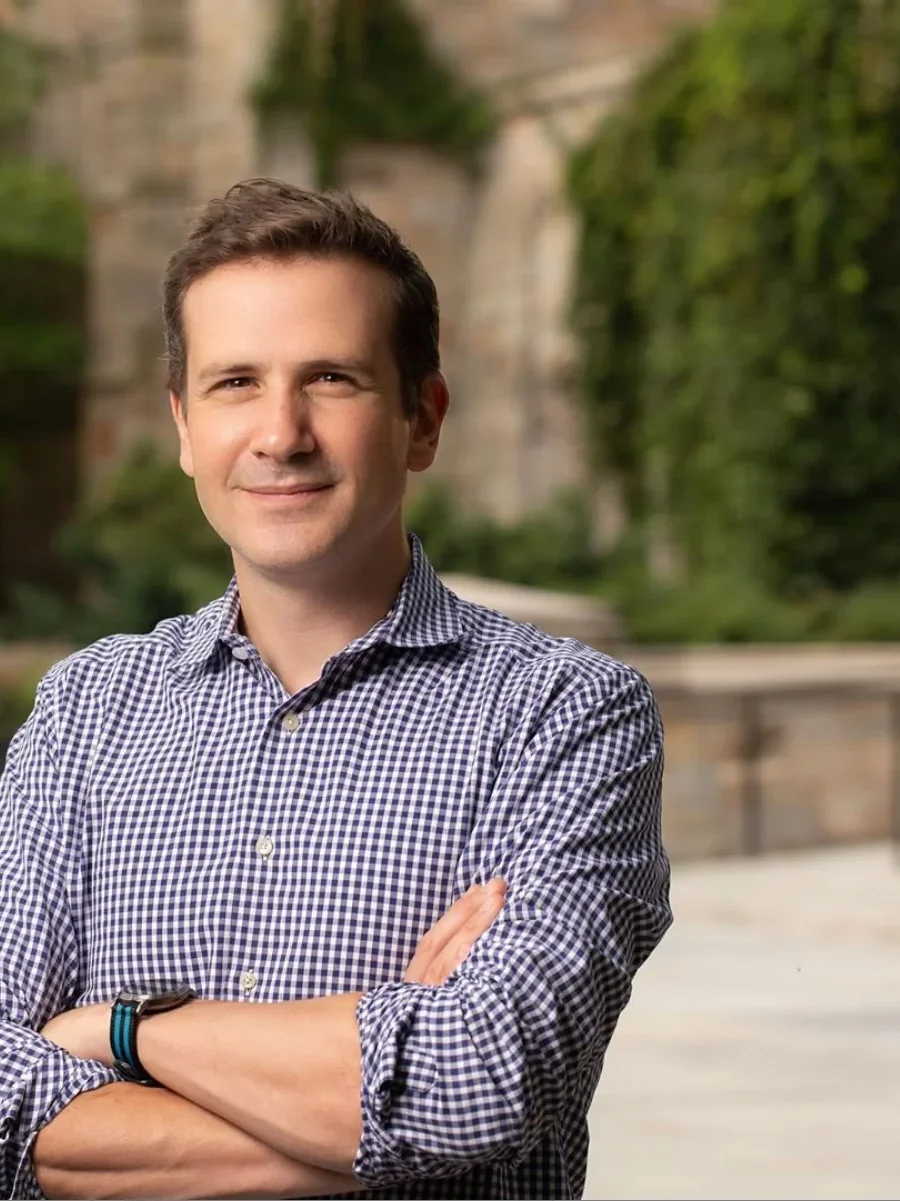
F. Perry Wilson, MD MSCE is a nephrologist, clinical researcher, and Associate Professor of Medicine and Public Health at Yale University, where he directs the Clinical and Translational Research Accelerator. He hosts the Wellness, Actually podcast with Emily Oster, writes the weekly Impact Factor column on Medscape, and is the author of How Medicine Works and When It Doesn't (Grand Central, 2023).