Wellness, Actually · June 18, 2026
How Much Sleep Do You Actually Need? What the Science Says
Short answer
About seven hours for most adults, more if you train hard. Judge whether you're rested by how you feel during the day and whether you can wake at a normal hour when given the chance, not by a score on your wrist. If you're sleepy all day or your partner hears you stop breathing, get evaluated for sleep apnea. For months-long insomnia the strongest fix is CBT-I, not sleep hygiene and not a pill.
Every animal sleeps. That is a strange fact when you sit with it. Lying unconscious for hours, fully exposed, is about the dumbest thing an organism could evolve to do. So the fact that natural selection kept it around tells you sleep must be earning its keep. We just don't fully understand how.
Why we sleep, as far as we can tell
Sleep is nearly universal. Dolphins sleep one half of the brain at a time so they can keep breathing in the water. Jellyfish, with a distributed nervous system and no brain at all, cycle through phases where they go less responsive to stimuli. There are even single-celled organisms that functionally sleep. Push the timeline back far enough and you find the same on-off rhythm in early plants, which photosynthesize during the day and fix nitrogen at night because the two reactions can't run in the same cell at once.
For humans, two functions stand out. The first is memory consolidation, the conversion of short-term memories into long-term ones, which appears to happen largely while you sleep. The second is a cleaning process. A set of studies on mice found that during sleep, brain waves line up in a pattern that moves debris out of the brain, with cerebrospinal fluid washing over the tissue and flushing out the byproducts of being awake. Keep an animal awake long enough and it dies. We still aren't entirely sure why.
The clock in your head runs on light
Your circadian rhythm is run by the suprachiasmatic nucleus, a small region of the brain that acts as a master clock. It governs more than sleepiness. Basal body temperature and the morning cortisol spike are on its schedule too. People who lose that part of the brain to a stroke or tumor stop following day-night cycles and free-run instead.
The clock has a direct neural pathway to your retinas, and on Earth it stays in sync through light. Put someone in a room with no outside light and they settle into an inherent pace. Some people run a 25 or 26 hour internal day and drift later and later; others run short and drift earlier. Daylight pulls everyone back to 24 hours, which is also why trying to live on a self-imposed 26-hour schedule fails. The suprachiasmatic nucleus connects to the pineal gland, which releases melatonin, the hormone that helps make you sleepy and the same compound people buy as a supplement. At extreme latitudes, where summer is flooded with light and winter is dark, people report fragmented, shorter sleep in summer and longer sleep in the dark winter.
How much you need, and how to tell if you're getting it
Most adults need about seven hours a night. People doing high levels of physical activity probably need more, and a small share of the population genuinely needs less. There is a rare genetic condition called familial natural short sleep, where people get by fine on five to six hours. You almost certainly do not have it.
The simplest test of whether you're rested doesn't involve a device. If you're sufficiently rested, you shouldn't be tired during the day, and given the chance to sleep in, you should wake up at close to your usual time. Waking at 6:00 on a workday and 6:30 on a Saturday is fine. Sleeping until noon when given the opportunity means you are in debt. The same logic works for kids. A teenager who sleeps until 3:00 in the afternoon is not getting enough during the week.
Kids are where the shortfall is worst, and it's mostly the adults' fault. High schoolers need roughly 9 to 10 hours, and their circadian rhythm is naturally shifted later, so they should be going to bed and waking up later. Yet high schools often start earlier than elementary schools. When districts push start times back, kids do better in school and there are fewer car accidents. The other problem is oversubscription. Six practices, extra classes, homework that runs to 9:00 p.m. Sleep is not a nice-to-have you trade away for one more activity. It's a biological requirement.
What actually goes wrong, and what fixes it
Sleep happens in stages, and each has its own quirks. REM sleep, when you dream, is where much of that memory consolidation occurs. You're paralyzed from the neck down during REM to keep you from acting out your dreams, and when that fails people do act them out. Regain consciousness while the paralysis is still on and you get sleep paralysis, which is the frightening experience of lying awake and unable to move, sometimes with a sense of a presence in the room. Alcohol and benzodiazepines suppress REM sleep, which is worth knowing if you drink at night. Deep sleep is where the cleaning function and night terrors happen. Night terrors are common in young children and distinct from nightmares, which are a REM phenomenon.
Two conditions wreck sleep for a lot of people. The first is sleep apnea, which is massively underdiagnosed. The classic sign is severe daytime sleepiness, falling asleep at your desk or at a traffic light, but it also shows up as recurrent headaches and hypertension, with downstream cardiovascular risk. It is not limited to people who are overweight; the structure of your soft palate, nose, and jaw matters a lot. Many people are first flagged by a partner who hears snoring and pauses in breathing. If that could be you, get checked.
The second is insomnia. Chronic insomnia, defined as disrupted sleep at least three nights a week for at least three months, affects about 10% of the population. The most effective treatment is cognitive behavioral therapy for insomnia, a structured package of techniques. One counterintuitive piece: if you normally fall asleep at midnight, get into bed at midnight rather than lying awake for hours, so your brain relearns that bed means sleep. CBT-I is available beyond psychiatrists and psychologists, including through apps.
Sleep hygiene, the standard advice about no screens and a cool dark room, is what doctors reach for first, but the randomized trial data for sleep hygiene alone in insomnia is poor. Put your phone away for other reasons. It won't fix your insomnia.
People who skip CBT-I usually reach for substances. Some interfere with sleep: alcohol close to bedtime is the most common offender, along with benzodiazepines. Others are taken to promote sleep, like melatonin or prescription drugs such as zolpidem. Almost all of them carry some physiologic dependency, so stopping makes it temporarily harder to fall asleep. Melatonin is the exception, though in adults it's less effective for ordinary sleep and works best for resetting the clock in jet lag. You may have seen a study linking chronic melatonin use to heart failure. Don't buy it. That's reverse causality: people with serious sleep problems are already at cardiovascular risk and take melatonin to cope, so the poor sleep, not the supplement, is the likely driver.
Sleep trackers are a mixed bag. There isn't much data showing they improve sleep, and some people develop orthosomnia, getting so anxious about their sleep score that they sleep worse. If that's you, take it off. For others the feedback can be useful, especially for revealing how sharply alcohol drags down sleep quality. Before strapping one on, ask what you'd actually do with the number.
Bottom line
Aim for about seven hours, more if you train hard. Judge whether you're rested by how you feel during the day and whether you can wake at a normal hour when given the chance, not by a score on your wrist. If you're sleepy all day or your partner hears you stop breathing, get evaluated for sleep apnea. If you can't fall or stay asleep for months, the strongest fix is CBT-I, not sleep hygiene and not a pill. Sleep is not a luxury you earn. It's a requirement, and treating it as optional is how you get into trouble.
Here's our discussion from the episode:
I covered this in depth on Wellness, Actually, listen below.
Frequently asked questions
How many hours of sleep do adults actually need?
Most adults need about seven hours a night. People doing high levels of physical activity probably need more, and a small share of the population genuinely needs less. The simplest test is whether you feel tired during the day and whether you wake at close to your usual time when given the chance to sleep in.
Does sleep hygiene actually work for insomnia?
The randomized trial data for sleep hygiene alone in insomnia is poor. Advice like no screens before bed and a cool dark room is easy to give but doesn't reliably fix the problem. The most effective treatment is cognitive behavioral therapy for insomnia, a structured package of techniques.
What is the best treatment for chronic insomnia?
Cognitive behavioral therapy for insomnia, known as CBT-I, is the strongest treatment. One technique is to get into bed at the time you actually fall asleep, rather than lying awake for hours, so your brain relearns that bed means sleep. CBT-I is available beyond psychiatrists and psychologists, including through apps.
What are the signs of sleep apnea?
The classic sign is severe daytime sleepiness, like falling asleep at your desk or at a traffic light. It can also show up as recurrent headaches and high blood pressure, with downstream cardiovascular risk. Many people are first flagged by a partner who hears snoring and pauses in breathing, and it is not limited to people who are overweight.
Does melatonin cause heart failure?
There is no good evidence that it does. The alarming study linking chronic melatonin use to heart failure is reverse causality. People with serious sleep problems are already at cardiovascular risk and take melatonin to cope, so the poor sleep, not the supplement, is the likely driver. Melatonin works best for jet lag and is less effective for ordinary sleep in adults.
Are sleep trackers worth using?
There isn't much data showing sleep trackers improve sleep. Some people develop orthosomnia, getting so anxious about their score that they sleep worse, and if that's you it's best to take it off. For others the feedback can be useful, especially for revealing how much alcohol lowers sleep quality.
Wellness, Actually Podcast
"What's the deal with sleep?" — Listen to the full episode, including the week's health news and listener Q&A.
About the author
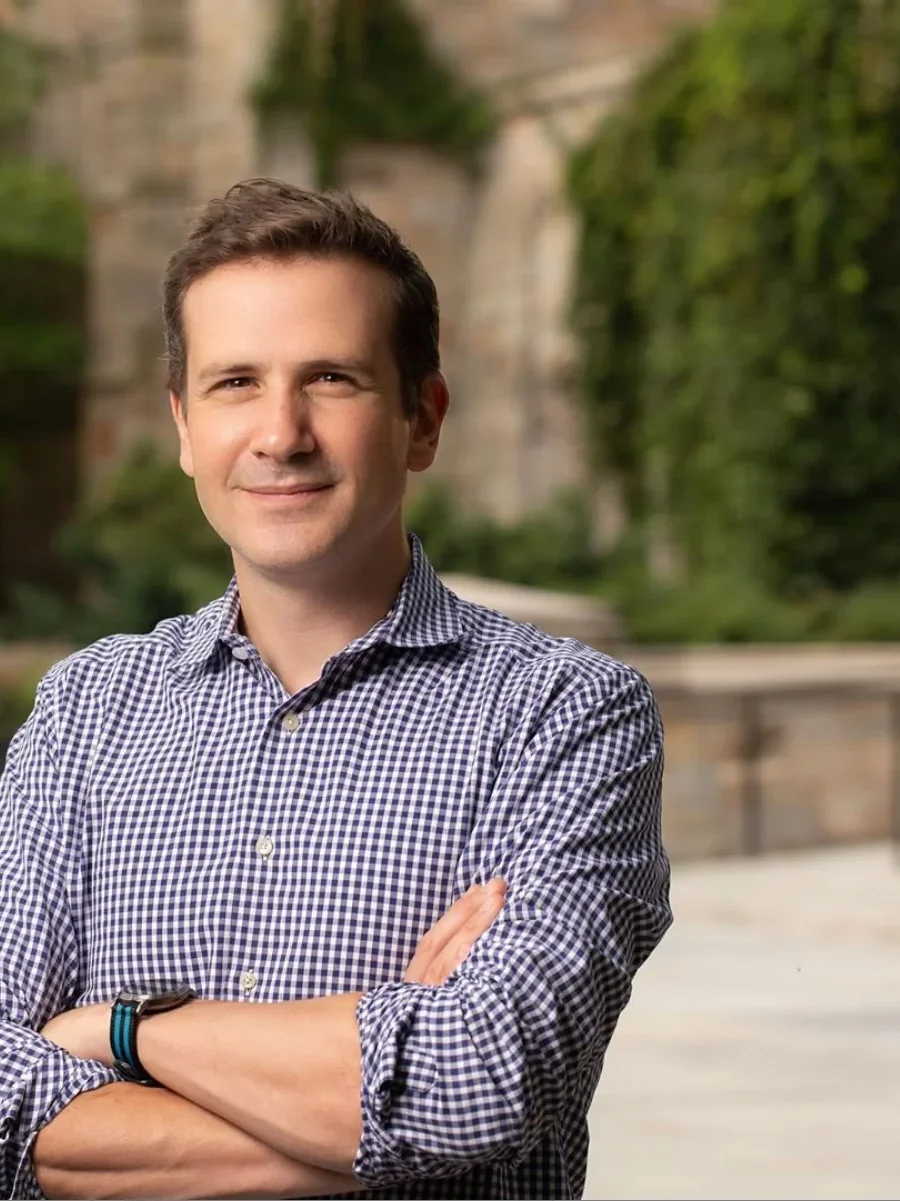
F. Perry Wilson, MD MSCE is a nephrologist, clinical researcher, and Associate Professor of Medicine and Public Health at Yale University, where he directs the Clinical and Translational Research Accelerator. He hosts the Wellness, Actually podcast with Emily Oster, writes the weekly Impact Factor column on Medscape, and is the author of How Medicine Works and When It Doesn't (Grand Central, 2023).